Teaching & Operations · 2026.01–06
Concept Studio — Running a Semester from Guest Lecture to Final Grades
Starting from a one-page guest lecture plan, I designed and ran one semester for 111 students in two class sections: team formation, an assignment site, a practical exam, automated grading, 100-point final grades, and publishing the results. The exam questions I actually set are reproduced here as given.
OutcomeRan 2 class sections, 22 teams, 111 students — a 97-slide guest lecture, 7 assignments, a 6-question practical exam, and 2,955 evaluations turned into 100-point grades
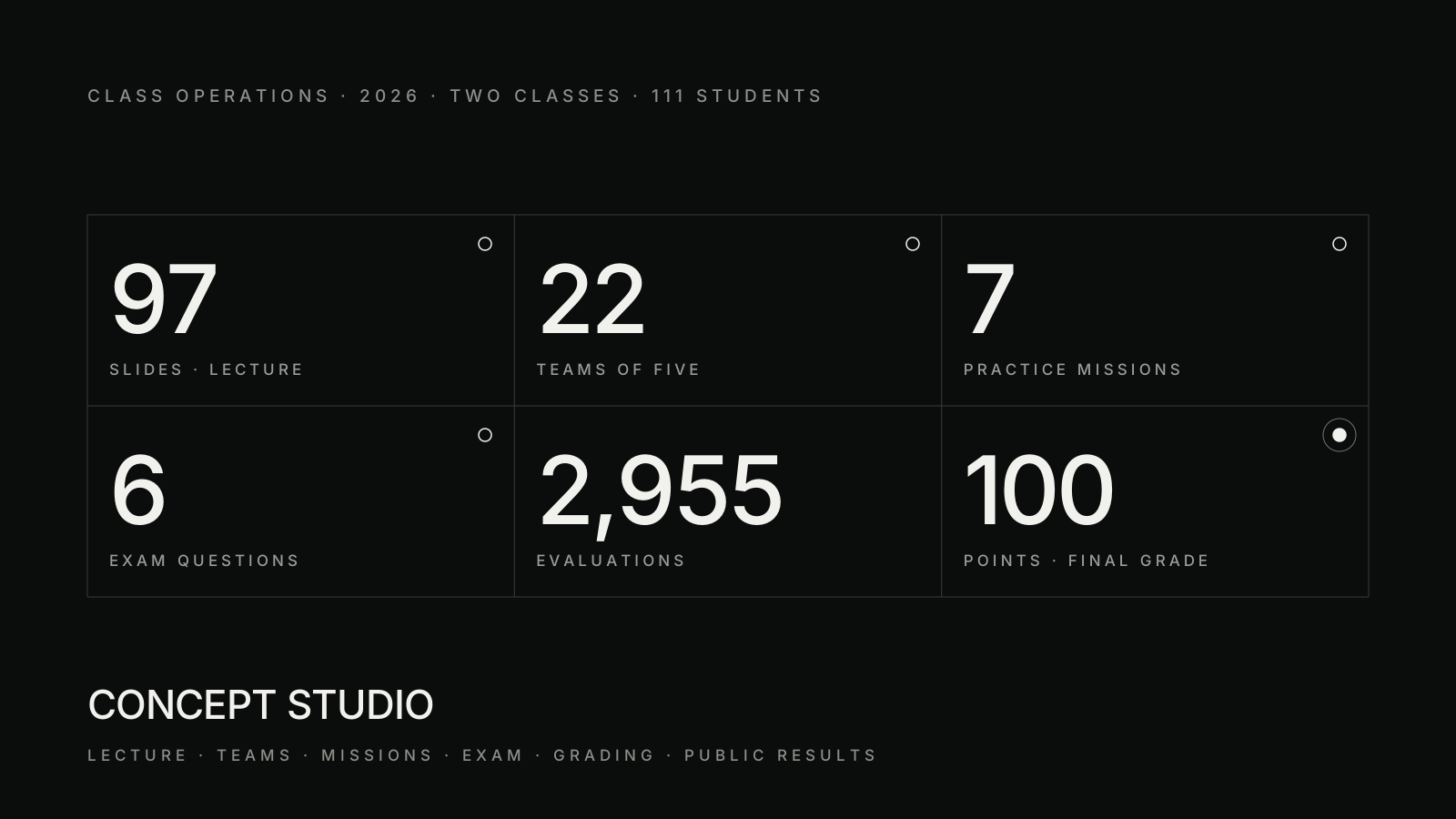
A record of designing and running a whole semester
Concept Studio (컨셉스튜디오) at Chung-Ang University is a course in which first-year students in the School of Art & Technology form teams and spend a semester developing and presenting a concept. I joined as teaching assistant and handled the whole operation: guest lecture, team formation, exercises, practical exam, grading, final grades, and publishing the results. The starting point for every design decision was to have students leave a record, alongside their results, of which prompts they used and what they changed.
| When | Stage | What I made |
|---|---|---|
| Jan 30 | Guest lecture plan | Four-part plan, revised Mar 13 |
| Mar | Team formation | 111 self-introductions classified, 22 teams of 5 |
| Mar 17 | Guest lecture | 97 slides, 3 demos, 1 hands-on sprint |
| Mar 23 | Exercise release | Assignment site, 3 tracks, 7 assignments |
| Mar 24 · Apr 6 · Apr 21 | Presentation evaluation | Round 1, Round 2, Final; everyone peer-evaluates |
| Mar 30–31 | Practical exam | THE AI ARCHITECT, 3 questions per section |
| Apr 10–11 | Grading | Vision rubric grading, rank-based regrading |
| Apr 27 | Final grades | 7 items, 100 points; results site; grade reply helper |
Guest lecture: Where Are We Now? («지금, 우리는 어디쯤 와있나»)
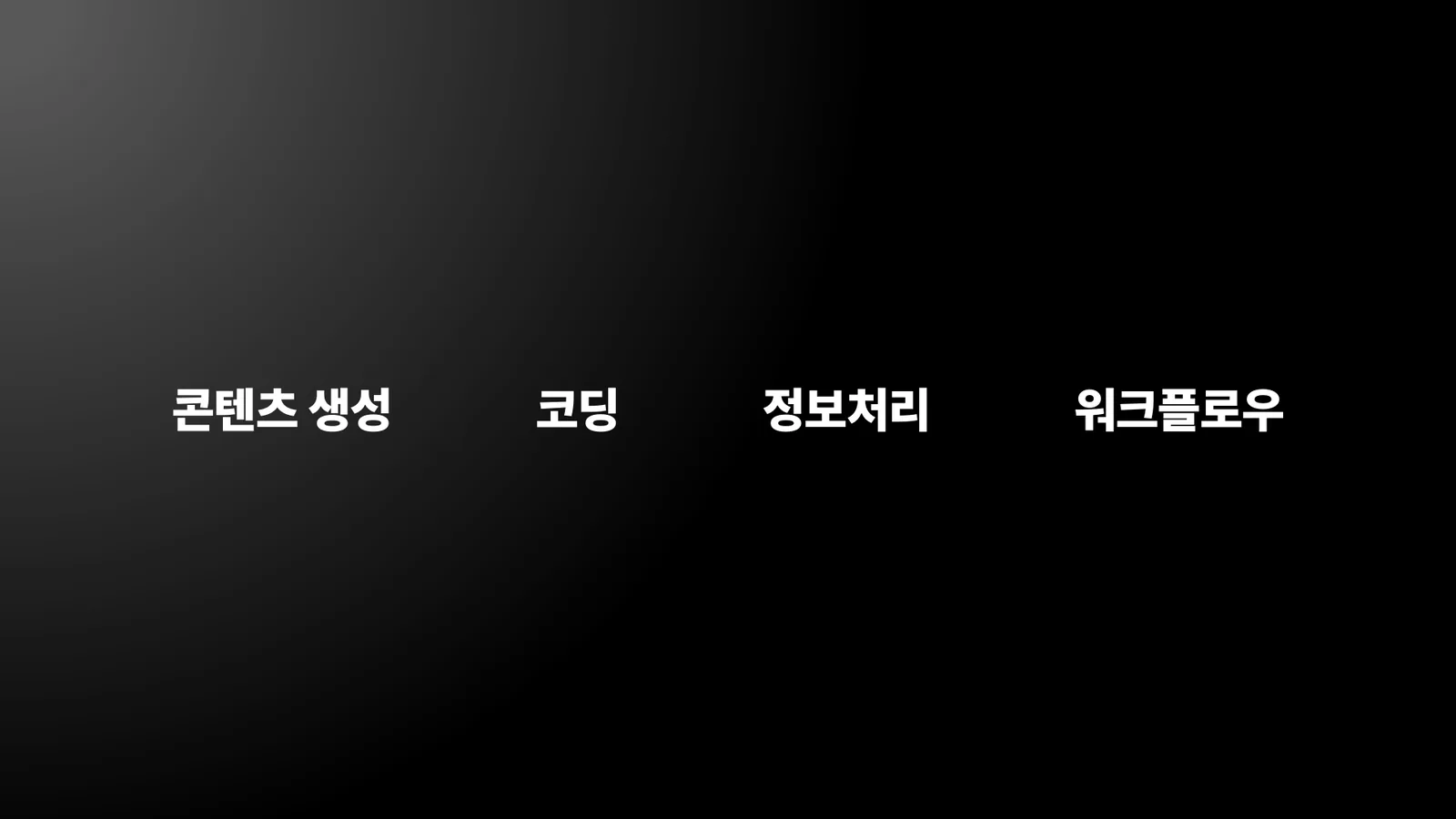
The guest lecture plan I wrote on Jan 30 had one argument. Treat generative AI as base infrastructure for scholarship and practice, and move from being a User of a single tool to being a Conductor who arranges and directs AIs. I split the abilities this takes — defining the problem, switching tools and methods to fit the situation, and designing the flow toward a result — into four parts.
- Content generation — the democratization of creation. Once the barrier to entry for video and image generation tools has fallen, what remains is planning: what you make, and why. I showed a diagram of a round-trip pipeline in which Human and AI pass back and forth between idea, brainstorming, scenario, master scene, and shot.
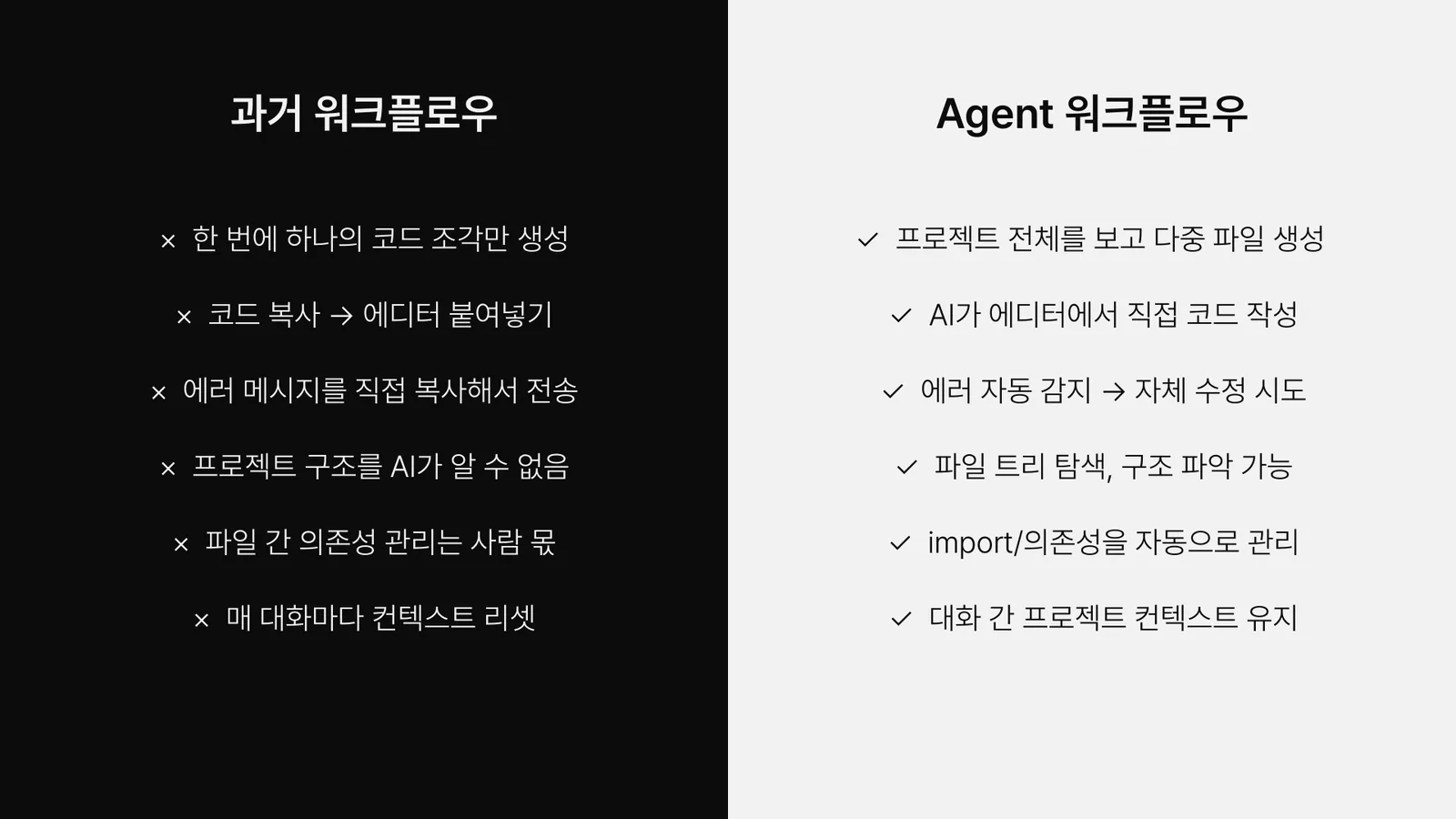
- Coding — from labor to conducting. I compared, six items each, the old workflow of copying and pasting code snippets with an agent workflow that looks at the whole project and edits multiple files.
- Information processing — a second brain. I compared how Skills (which document capabilities), Obsidian, and NotebookLM are used.
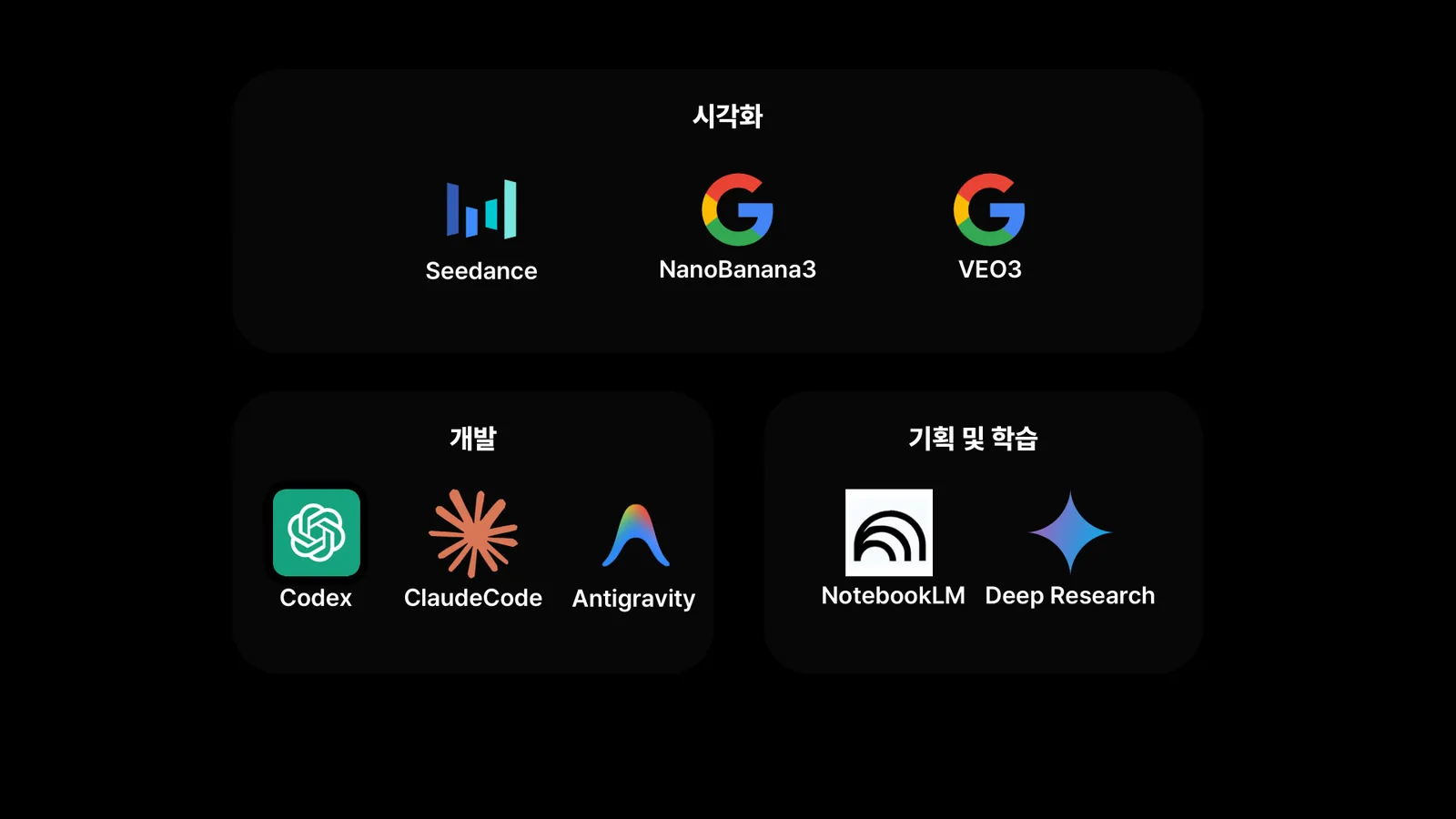
- Workflow — the birth of the personal team. I closed with four types of multi-agent systems, a map of the tool landscape, and how to drive a team project.
The Mar 13 revision attached a hands-on assignment and a follow-up demo to each part: making a storyboard, classifying student self-introductions with Antigravity, and summarizing and structuring lecture content with NotebookLM. The main lecture on Mar 17 ran as 97 slides with 3 live demos, plus 1 hands-on sprint in which each student put Seoul subway boarding and alighting data into their own folder and used an agent to analyze and visualize it.

A conductor does not need to know perfectly how to play every instrument, but must fully understand the flow of the music. In the same way, we need to build the ability to define problems, to change tools and methods flexibly as the situation demands, and to design the flow all the way to the result we want.
I also gave a guest lecture to first-year students as a TA in the same course in spring 2024. That one centered on my experience driving projects; only the parts on how to assemble a team and on taking a wide view were carried over into the 2026 lecture.
Team formation — from 111 self-introductions to 22 teams of 5
I extracted the self-introductions students submitted as text, classified them into 9 interest areas and 7 types of strength, and cross-checked them against the enrollment list to build the input pool for team assignment. Teams were formed automatically with 5 members as the baseline. Penalties kept international students from clustering in one team, kept gender and extroversion/introversion from skewing to one side, and kept interests connected; after a greedy assignment, a pairwise-swap local search refined the result for up to 12 rounds. Ambiguous classifications and the final team rosters were checked and locked by a person on a review screen.
- 12 scripts, 4,623 lines
- Result: 22 teams (11 per section), 111 students
- Delivered as a single HTML file with the CSS and data inlined, plus PDF and PPTX
Exercises: «THE AI ARCHITECT» — 3 tracks, 7 assignments
These exercises make students do by hand what the guest lecture talked about. There are seven assignments across three tracks, with three assigned to each section.
| Track | Assignment | Section |
|---|---|---|
| Visionary · Visual prompting | The Profiler / The Replicator | Section 1 / Section 2 |
| Architect · Algorithmic thinking | The Scheduler / The Enigma | Section 1 / Section 2 |
| Analyst · Data processing | The Insight Miner / The Gatekeeper / The Dietitian | Section 1 / Section 2 / Both |
Every assignment required, alongside the result files, a process-log.md (prompts, number of attempts, improvement log) and a validation.md (how the result was checked, and its limits). The points were also split — result quality 35, AI strategy 25, problem definition 20, explanation 20 — so that process counted toward the score.
Students received an assignment site built from 12 HTML pages and one CSS file, with no build tools. Each assignment page was fixed to six blocks: overview, input materials, what to do, downloads, submission format, and notes. The first screen set keeping file names and recording the process as rules. A separate master document was kept for the teaching staff, so students worked only from the site and the provided files.
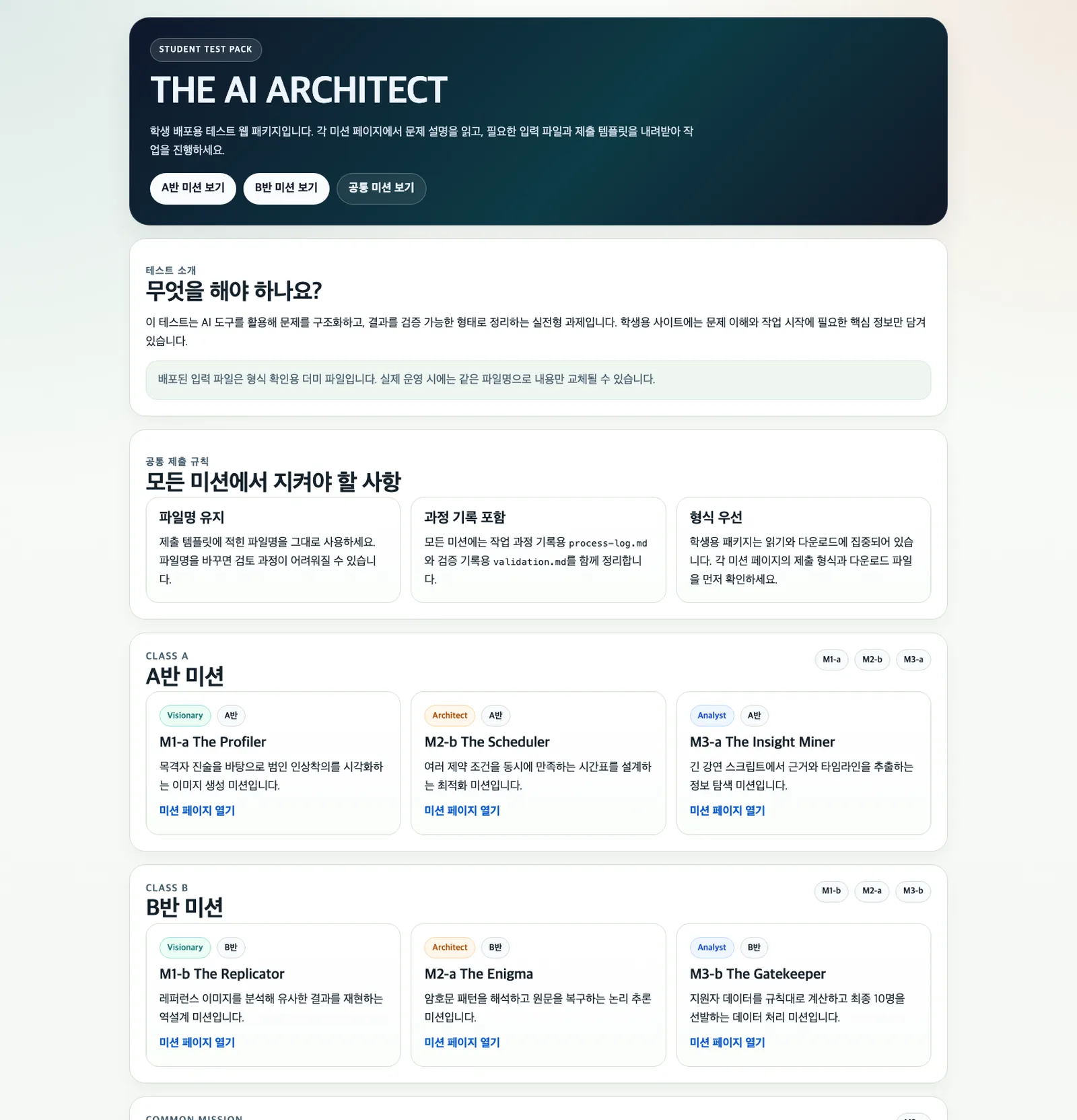
How the cipher assignment’s design changed
The first design asked students to find the one correct path among nine combinations: a fixed step 1, three branches at step 2, and three branches at step 3. I ran all nine combinations to confirm there was only one answer, and also built a simulator showing how the time differs between a student searching alone in series and a student paired with AI searching two at a time.
The released version switched to a three-door structure. The same KEY opens three doors using Caesar, Vigenère, and rotor methods, and the wrong doors contain sentences pointing down another path. The hint book presented six ciphers in the same format — the 3 actually used plus 3 more — so students could practice narrowing the candidates, and each cipher came with example questions to ask an AI.
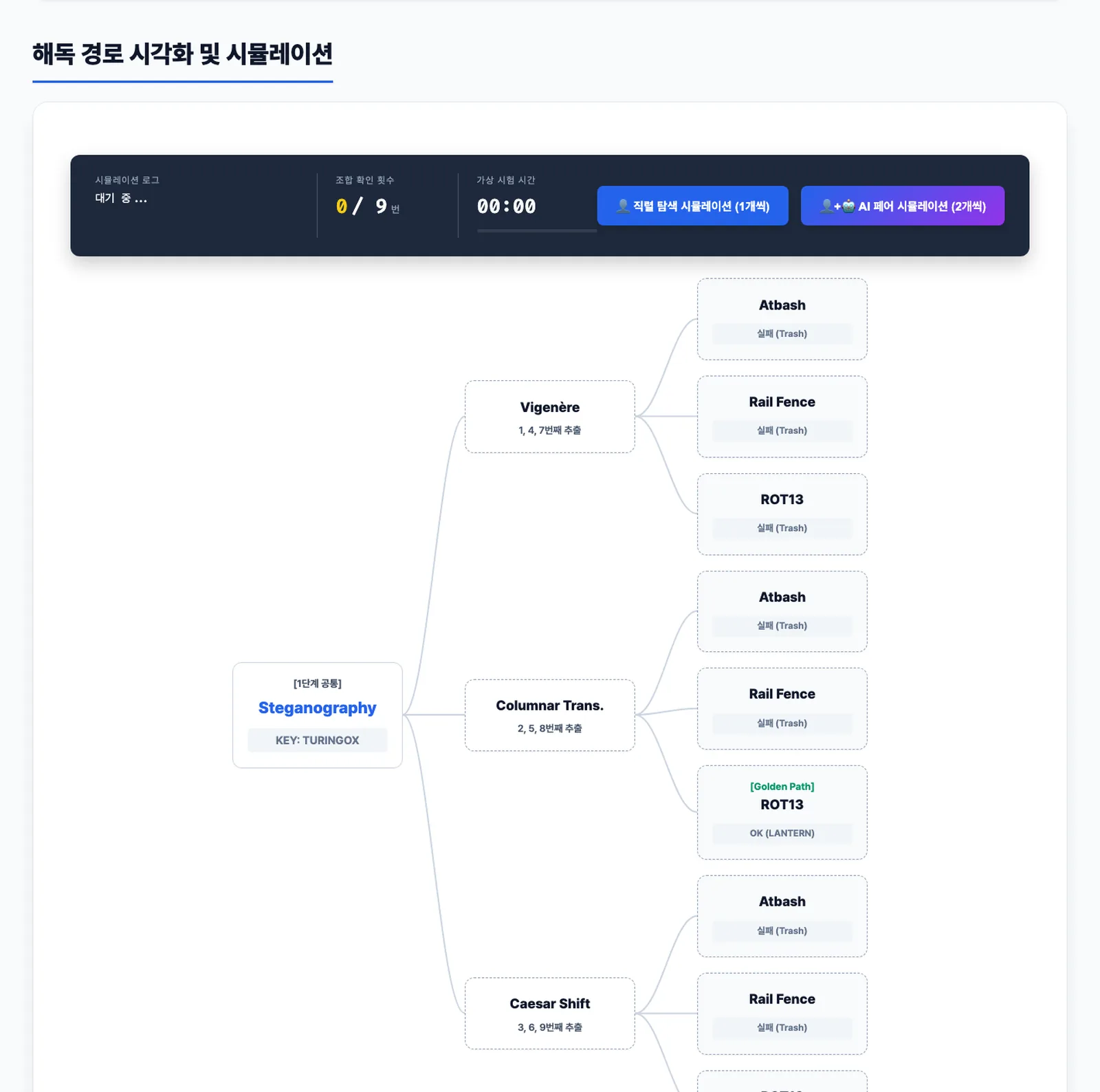
How the exam materials were made
- Witness audio. I rewrote the script three times, assigned different voice presets to the two speakers (a police officer and a witness), synthesized 41 turns, and joined them with 0.42-second gaps. The script plants statements that are reversed partway through, so answers that only transcribe get caught.
- The correct composite sketch. I first made a faceless template, then generated the correct face on top of it with a prompt that pinned features down in numbers, such as an eye-area ratio of 1.18 and a scar length of 18–22 mm. Each item in the grading rubric maps to one of these values.
- The timetable problem. A draft with 7 constraints was revised three times on Mar 30 alone, growing to 14. The last two constraints can only be filled in by looking up course names on the department website, so the structure became: 12 constraints narrow the candidates to four, and the remaining two pick one.
- The applicant selection problem. Data on 100 people was distributed as three files of 33, 33, and 34 people, so no ranking comes out unless they are merged.
Practical exam: «THE AI ARCHITECT» — the questions as set
Six of the seven exercise assignments became practical exam questions. Each of the two sections got 3, and fixed output specifications made automated grading possible. Students received printed question sheets and submitted answers through Google Forms.
Below are the questions exactly as given to students.
Section 1 Q1 · The Profiler — Reconstruct a face from testimony
You are the investigator assigned to the case. The investigation team has secured an audio file containing witness testimony and a template image for making a composite sketch. Using the provided files, organize the suspect’s physical features, then create a final composite sketch reflecting those features on top of
template.png.
These are the materials actually distributed in the exam. Feel free to listen and try it yourself.
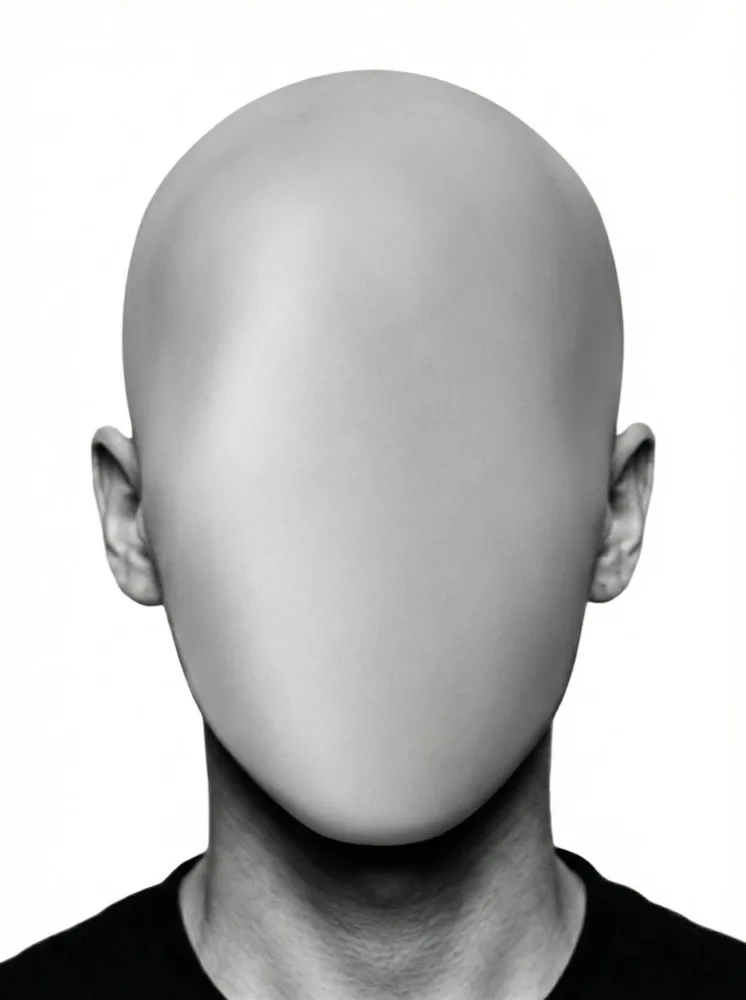
- Submission — 1 final composite sketch image (3:4 recommended)
Submissions — a strong one and a weaker one. The composites from 48 students were graded with the same rubric.
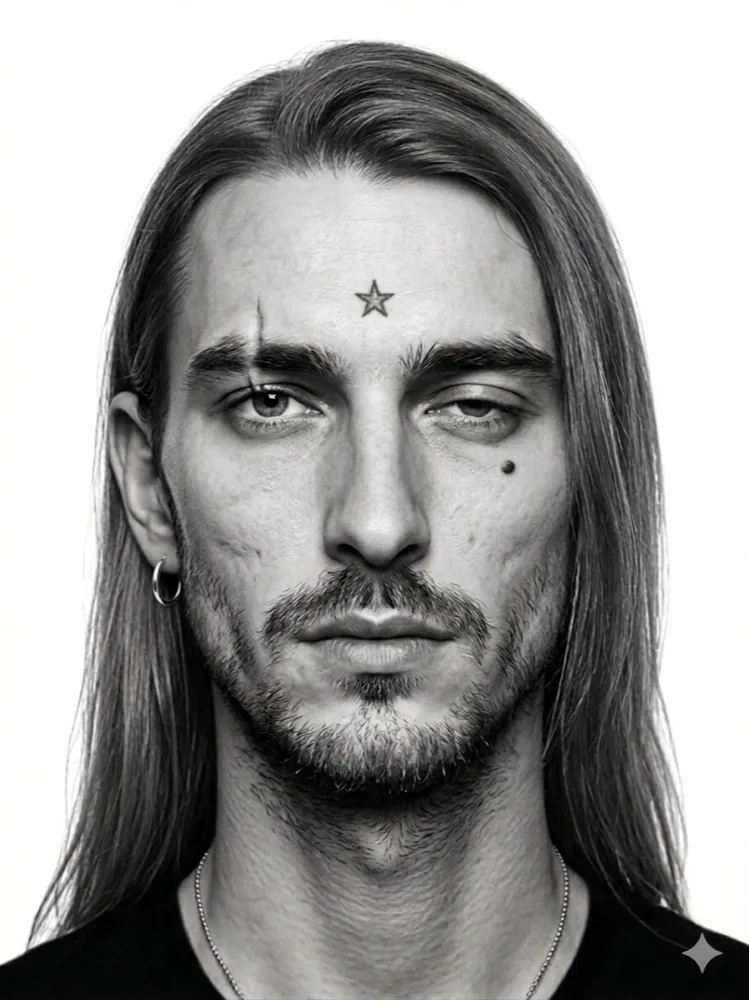
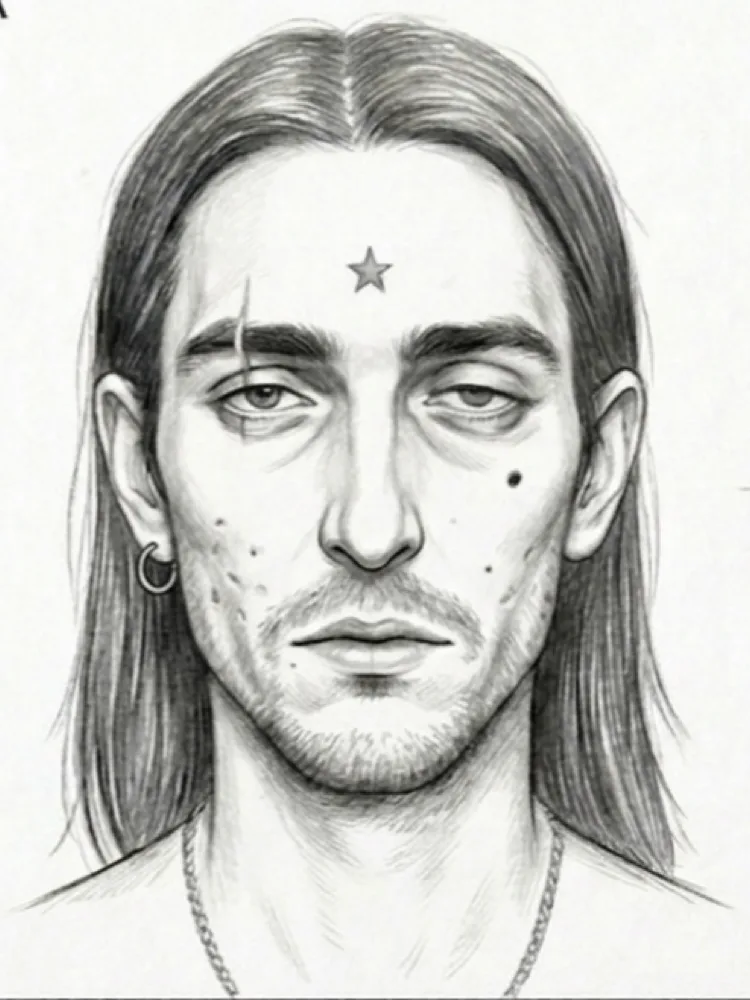
For grading, a 13-item rubric drawn from the testimony (hair, star tattoo, face shape, eye asymmetry, eyebrows and scar, nose, mouth, cheekbone mole, beard, earrings, necklace, left–right consistency, template use) was passed to a Vision model (Gemini), which returned a score and a rationale in Korean for each item; it ran in batches with a cost cap. The score gap between the two submissions above comes straight from this automated grading’s rationale.
Section 1 Q2 · The Scheduler — Find the one timetable
Using the course schedule and constraints provided, build a possible timetable. If you apply all the constraints, exactly one timetable remains. Answer the questions based on that timetable.
| Code | Course | Section | Type | Area | Credits | Days | Time |
|---|---|---|---|---|---|---|---|
| CSE101 | Computational Thinking | 01 | Major required | MAJOR | 3 | Mon | 09:00-10:15 |
| CSE101 | Computational Thinking | 02 | Major required | MAJOR | 3 | Tue | 10:30-11:45 |
| MTH210 | Digital Mathematics | 01 | Major required | MAJOR | 3 | Tue,Thu | 09:00-10:15 |
| MTH210 | Digital Mathematics | 02 | Major required | MAJOR | 3 | Mon,Wed | 11:00-12:15 |
| DAT210 | Data Mathematics | 01 | Major required | MAJOR | 3 | Tue,Thu | 09:00-10:15 |
| DAT210 | Data Mathematics | 02 | Major required | MAJOR | 3 | Mon,Wed | 11:00-12:15 |
| CSE102 | Introduction to Programming | 01 | Major required | MAJOR | 3 | Tue,Thu | 13:00-14:15 |
| CSE102 | Introduction to Programming | 02 | Major required | MAJOR | 3 | Mon,Wed | 15:30-16:45 |
| UNI101 | College Life Seminar | 01 | Major required | MAJOR | 1 | Mon | 13:00-13:50 |
| UNI101 | College Life Seminar | 02 | Major required | MAJOR | 1 | Wed | 13:00-13:50 |
| HUM130 | Reading the Modern Humanities | 01 | General education | HUM | 3 | Mon,Wed | 14:00-15:15 |
| HUM120 | Introduction to Philosophy | 01 | General education | HUM | 3 | Tue | 15:00-17:45 |
| SOC110 | Society and Data | 01 | General education | SOC | 3 | Thu | 10:30-11:45 |
| SOC120 | Conflict and Communication | 01 | General education | SOC | 3 | Fri | 10:30-11:45 |
| ART240 | Team Collaboration Design | 01 | General education | ART | 3 | Mon | 16:00-17:15 |
| ART230 | Creative Technology | 01 | General education | ART | 3 | Mon | 16:00-17:15 |
| LANG101 | Basic English Conversation | 01 | General education | LANG | 3 | Tue,Thu | 09:00-10:15 |
| SCI105 | Scientific Thinking | 01 | General education | SCI | 3 | Tue,Thu | 15:30-16:45 |
| ART110 | Design Literacy | 01 | General education | ART | 3 | Wed | 09:30-10:45 |
| PE101 | Physical Fitness | 01 | General education | PE | 1 | Wed | 17:00-18:15 |
| PE101 | Physical Fitness | 02 | General education | PE | 1 | Fri | 16:00-17:15 |
Constraints (14)
- Major requirements must include CSE101, CSE102, and UNI101, and exactly 1 math course (MTH210 or DAT210) is chosen. Each chosen course is taken in exactly 1 section.
- Total credits: 18–20.
- At least 6 credits of general education, in at least 2 general education areas.
- No classes on Friday.
- At most 3 classes per day.
- Class times on the same day must not overlap.
- No class may start before 09:00 or end after 18:15.
- Total credits are exactly 19.
- Exactly 3 classes on Tuesday, starting at 09:00 / 10:30 / 13:00.
- All 3 Tuesday classes are major requirements.
- Exactly 1 class on Wednesday, at 14:00-15:15.
- Thu 10:30-11:45 is SOC110.
- On the department website’s curriculum page (School of Art & Technology curriculum), find the name of the only project course in the first semester of third year, and complete the timetable so that the third class on Monday matches that course name.
- On the department website’s curriculum page, find the name of the major foundation course in the first semester of second year, and complete the timetable so that the first class on Tuesday matches that course name.
The more precisely the constraints are applied, the fewer the possibilities; with all of them applied, the timetable is unique.
I planted one trap in this problem. A solution that only transcribes the conditions mechanically is set up to get caught. I won’t say where it is.
Question — In the unique timetable you completed, what is ① the third class on Monday, ② the first class on Tuesday, ③ the first class on Wednesday, ④ the second class on Thursday, and ⑤ the third class on Thursday?
Section 1 Q3 · The Insight Miner — Dig only facts out of a film
Analyze the documentary «The Thinking Game», released in 2025, and find verifiable clues — objects, places, times, and people’s actions and words — to answer. Every answer is information you can confirm directly from the film’s picture or sound.
This assignment was designed so that students answer only with what can be confirmed directly in the film. The actual 5 multiple-choice questions:
- In the scene where Demis Hassabis, at 17, explains the division of roles between humans and AI while developing «Theme Park» at Bullfrog, what name is in the nickname field (WHAT IS YOUR NICKNAME) on the game’s initial setup screen? —
DEMIGOD/TARANTINO/CAMERON/BULLFROG/PLAYER1 - When Mana talks about the match after winning a hard-earned game against AlphaStar, what drink is Hassabis holding? —
cola/coffee/energy drink/beer/apple juice - When Hassabis points at an object on the table and asks the AI agent ‘Alpha’ “What is this?”, what are the 4 objects of one kind captured lined up next to it? —
a bundle of pencils/spare chess pieces/dominoes/dice/pawns - What optimal strategy did DeepMind’s DQN algorithm find in ‘Breakout’ after 500 rounds of training? —
open a path along the side wall and send the ball behind the bricks/lengthen the paddle in real time to match the ball's speed/predict the ball's trajectory and stay in the center/learn every brick and hit them precisely - When DeepMind kept its office location secret in the early days, what did an applicant who came for an interview text his wife? —
the name of the company's head/when the interview was expected to end/exactly where I am right now/the name of the AI the company uses/how many people showed up
Section 2 Q1 · The Replicator — Replicate it with a one-shot prompt
Observe the reference image shown on screen closely, then reproduce an image as similar to the original as possible.
The condition for this question is a one-shot prompting constraint.
- No limit on the number of attempts or the tools used.
- However, every attempt must be one-shot: for each generation, enter one complete text prompt once and take the result.
- Step-by-step revision through conversational follow-up instructions, or repeatedly refining the same output, is not allowed.
- Capturing, saving, or editing the reference image directly, or using it via image-to-image, inpainting, or reference upload, is also not allowed.
- Submission — 1 final result image (3:4) + the original text of the one-shot prompt actually used + the model name.
This isolates and evaluates the ability to design a prompt that puts into words exactly what you see.
Reference image and submissions. The target is the clay figurine (토우) below. It has many details — a red crescent-horn crown, round earrings with a star pattern, teal feather shoulder pieces, an eye pattern at the waist, a pink dokkaebi (Korean goblin) mask on the right shoulder, a dagger, and black boots — so observation and prompt density translate directly into the score.
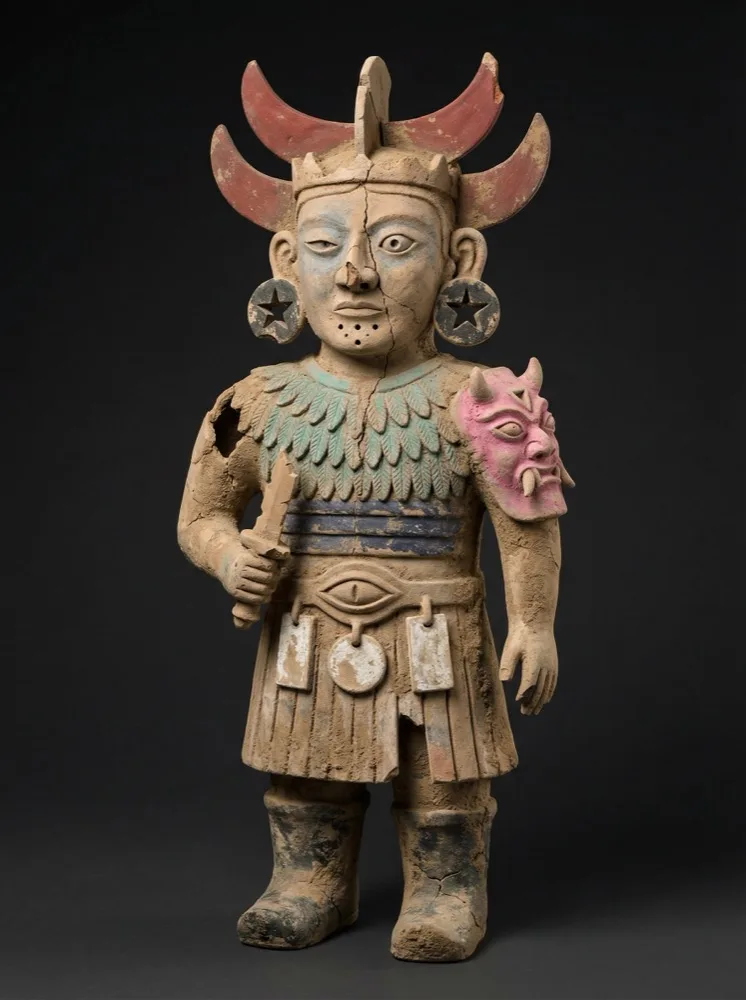
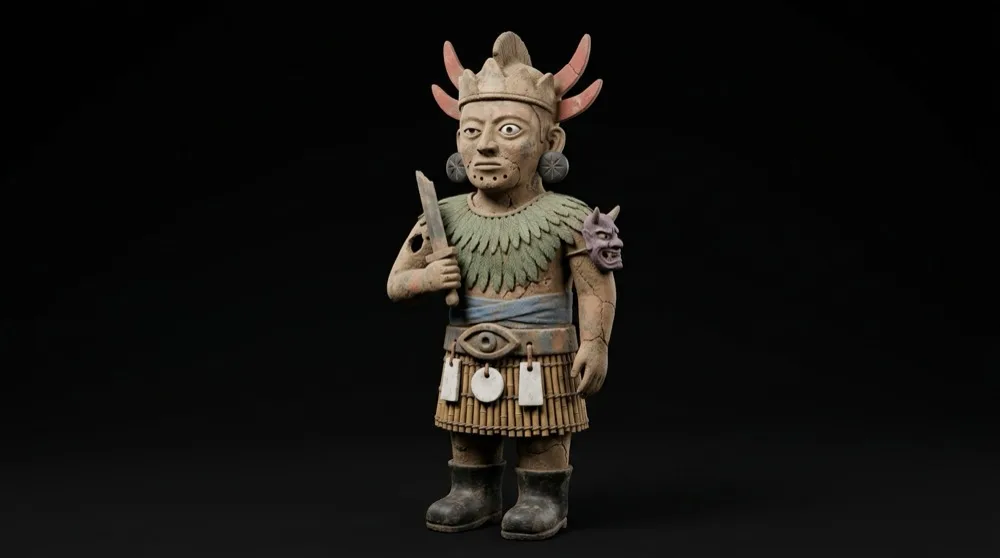
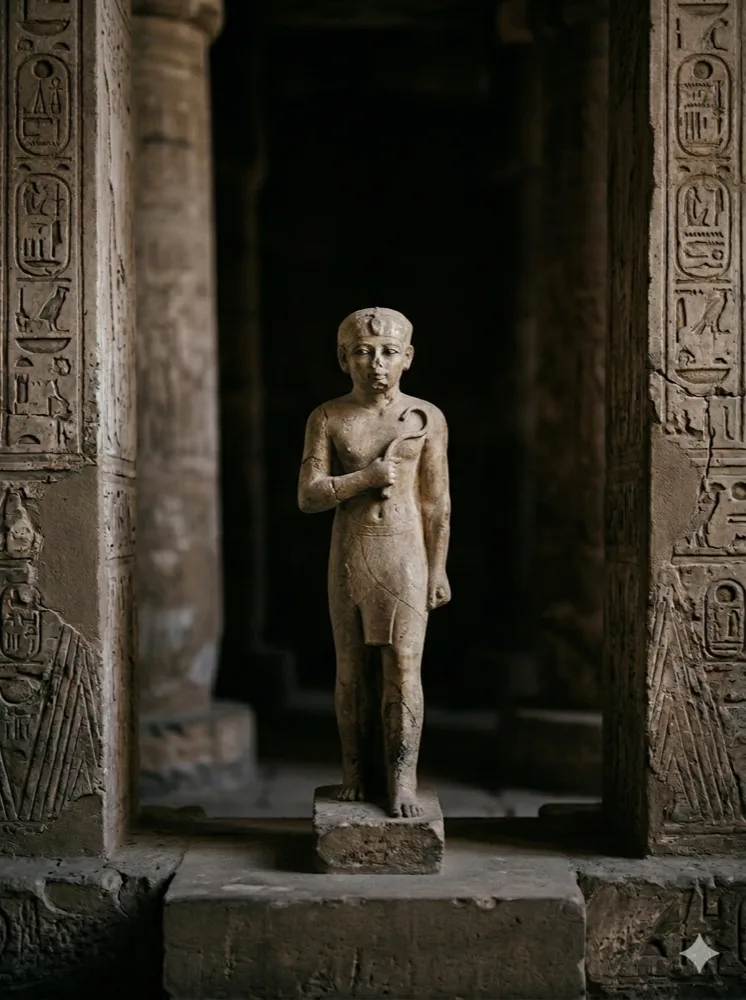
Grading was automated by putting the reference image and the submitted image side by side into a Vision model and scoring how well each element matched; only the cases near ranking boundaries were adjusted by hand.
Section 2 Q2 · The Enigma — Open the true door of three
You must find the hidden master KEY and decode the true door among three.
Step 1 · Extract the master KEY — Check the first letter of each of the 64 words below; turn uppercase into 1 and lowercase into 0, group the bits by 8, and convert them to ASCII characters to make an 8-letter uppercase English KEY.
ancient Ruins hide Many secrets behind silent stones travelers Search
for patterns inside forgotten halls Tonight careful Minds observe Every
symbol while Echoes Guide brave Students toward Clear answers across
Shadowed Paths patient Teams verify Logic before Trusting Any Clue steady
Focus turns small Signals Into Certain Progress curious Hearts learn Fast
when questions Remain honest final Doors open only after Methodical work wins
Step 2 · Decode the three doors — Each of the three doors is locked with a different classical cipher. Use the KEY from Step 1, guess the method, and decrypt.
| Door | Ciphertext |
|---|---|
| Door 1 · The worn Roman door | IWXHXHCDIIWTUXCPASDDGIGNPCDIWTGEPIW |
| Door 2 · The ornate Renaissance door | RLGKAPLWCOLXEBROJSWLDWIGBEUZWBZVB |
| Door 3 · The door of steel and gears | VSIJKRVBPBGSLMRKOBYZAYHPHUTMLRLYCWDD |
The answer is behind only one of the three doors. The correct door is the one whose decryption begins with OKZZZFINALPASSWORDZZZ. The problem is to compare the three doors and find the one true door. (In the operations materials, I checked all nine possible combinations directly to verify that only one correct path comes out.)
This problem has a trap too. It is designed so that following the procedure as written still leaves one more thing to check at the end.
Section 2 Q3 · The Gatekeeper — Pick 10 out of 100
You need to review data on 100 applicants for new club members and pick the final 10. Calculate each applicant’s
total_scorefrom the data provided.
Scoring rules — ① gpa × 10 ② available_hours_per_week × 3 ③ interview_score counted at 50% ④ 30-point deduction if disciplinary_issue is Y ⑤ sort by total_score descending ⑥ on a tie, higher interview_score first; if still tied, higher gpa first.
Question — What are the names of the final selections ranked ① 1st ② 4th ③ 6th ④ 8th ⑤ 10th?
It calls for verifiable data processing: anyone who applies the same rules gets the same result.
Evaluation and grades — 2,955 evaluations into 100 points
There were three presentations, on Mar 24, Apr 6, and Apr 21, and each time every student rated the ten teams other than their own on four items on a 5-point scale. Of the 1,025 response rows from Round 1, I automatically normalized how team names were written, cross-checked them against the roster, and used only the 1,021 rows that passed four integrity checks: row count, section totals, conversion, and total score.
Scores were combined as professor 40%, TA 10%, and peers 50%, and the stage weights were 15 points for Round 1, 15 for Round 2, and 30 for the Final. For rounds where one role’s evaluation was missing, I renormalized using the available weights or filled in manual scores, and recorded in a column which method was used.
| Item | Points | Unit | Method |
|---|---|---|---|
| Round 1 presentation | 15 | Team | Role-weighted sum |
| Round 2 presentation | 15 | Team | Role-weighted sum |
| Final presentation | 30 | Team | Role-weighted sum |
| AI practical exam | 20 | Individual | Linear scaling with the top score in the section set to 20 |
| Self-introduction submitted | 2 | Individual | Submitted or not |
| Class cafe activity | 10 | Individual | Posts and comments converted on a log scale |
| Within-team peer evaluation | 8 | Individual | Average of scores received, excluding self-evaluation |
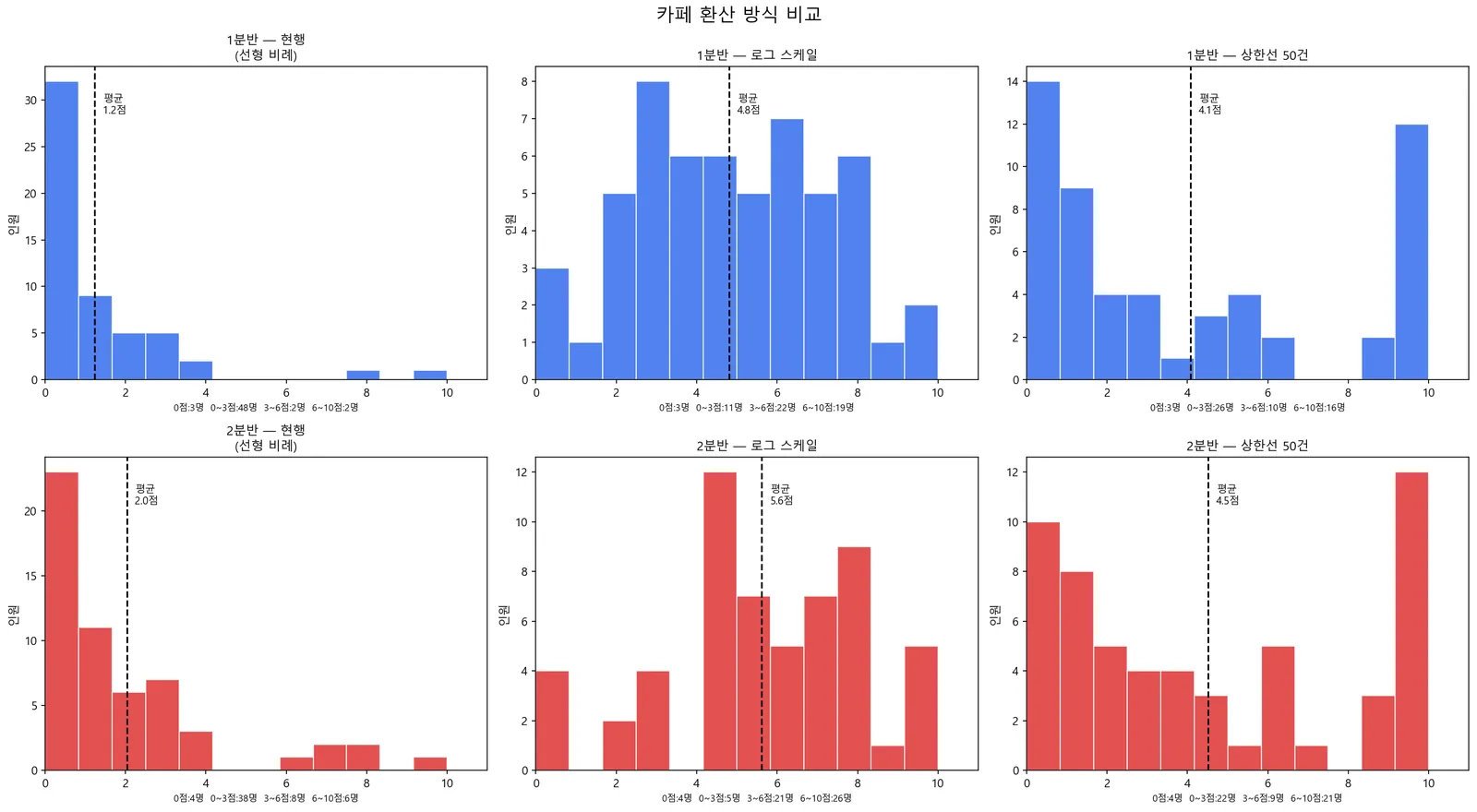
Two items were decided after comparing several options. Simply multiplying the practical exam score by 4 would have left even the top student in Section 1 at 18.3 points, with no one reaching full marks, so I switched to scaling against the section’s top score. With cafe activity on a linear scale, 93% of students bunched at 3 points or below; after comparing it with a cap option, I chose a log scale.
Grading automation
Image submissions were put into Gemini along with the reference image, which returned a score and a rationale in Korean for each rubric item. It is deduction-based, starting from full marks; it does not deduct for elements outside the rubric; and for items it cannot judge, it leaves a flag and gives half the points. A submission that was mirrored left to right as a whole was counted as correct if its asymmetric elements were consistently flipped. A cost cap of KRW 20,000 is hard-coded: the run stops before starting if the estimated cost exceeds it, and stops during the run if the accumulated cost exceeds it. In rank-based regrading, the ranking confirmed by a person was the source of truth, and the model’s only job was to rewrite item scores and rationales to fit that ranking.
Grade calculation pipeline
Normalizing the raw CSVs, role weights, combining into an individual 100-point score, a grade explanation page, a public results site, a PDF report for the professor, and a grade reply helper for students — all of this runs through 21 scripts and 7,309 lines. The grade explanation page states the evaluation method and the reason for each item, with graphs of five types: absolute, relative, binary, log, and peer. The reply helper takes a name or student ID and builds an email body with item-by-item scores, the class average, and the standard deviation, then copies it to the clipboard.
Student names and individual grades are not made public. This page keeps only the structures and tools built to run the course, and the questions actually set.