Side Projects · 2026
A Threads Account Run by AI Staff
An account-operation system where agents collect, select, write, and verify overseas AI news and a person only approves. I shut it down once, then rebuilt it with a different structure.
Outcomev1 stopped when cost exceeded results → redesigned with a new structure as v2, now running automatically
Overnight news by morning
Most overseas AI news comes out at night, Korean time. By the time you wake up, the moment has already passed. So I built an account that gathers what came out overnight and delivers it in the morning, and connected everything from collection to drafting post candidates into one pipeline.
- Collection — Major lab blogs, Hacker News, Reddit, and Korean AI news sections. Every 15 minutes during US business hours, less often otherwise.
- Deduplication — Groups items once by URL, then again by semantic similarity of title and body. News that shows up in several places at once gets extra points as a signal of buzz.
- Writing and style checks — Generated text has to pass three layers: style examples built from text written by real people, a deterministic checker that catches translationese, banned expressions, and even sentence rhythm, and a revision pass that rewrites only what was flagged. If it still fails after three revisions, it is discarded. Numbers and proper nouns that are not in the source are caught by code that cross-checks against it.
- Approval — A person presses the final publish button.
The number that said stop
I ran it with cost monitoring in place. Before long, the numbers showed that spending was large relative to results, and at that point I stopped the automation. What you can build and what is worth keeping in operation are different things.
That judgment became a design input. An account that summarizes and delivers news is just a lesser version of bigger accounts. There was something only this system could do: have the pipeline actually give work to AI and publish the logs of its successes and failures.
The second system: an editor-in-chief who only approves
So I changed what the account is. AI staff dig through the overseas AI scene and even run experiments, and I, as editor-in-chief, only approve.
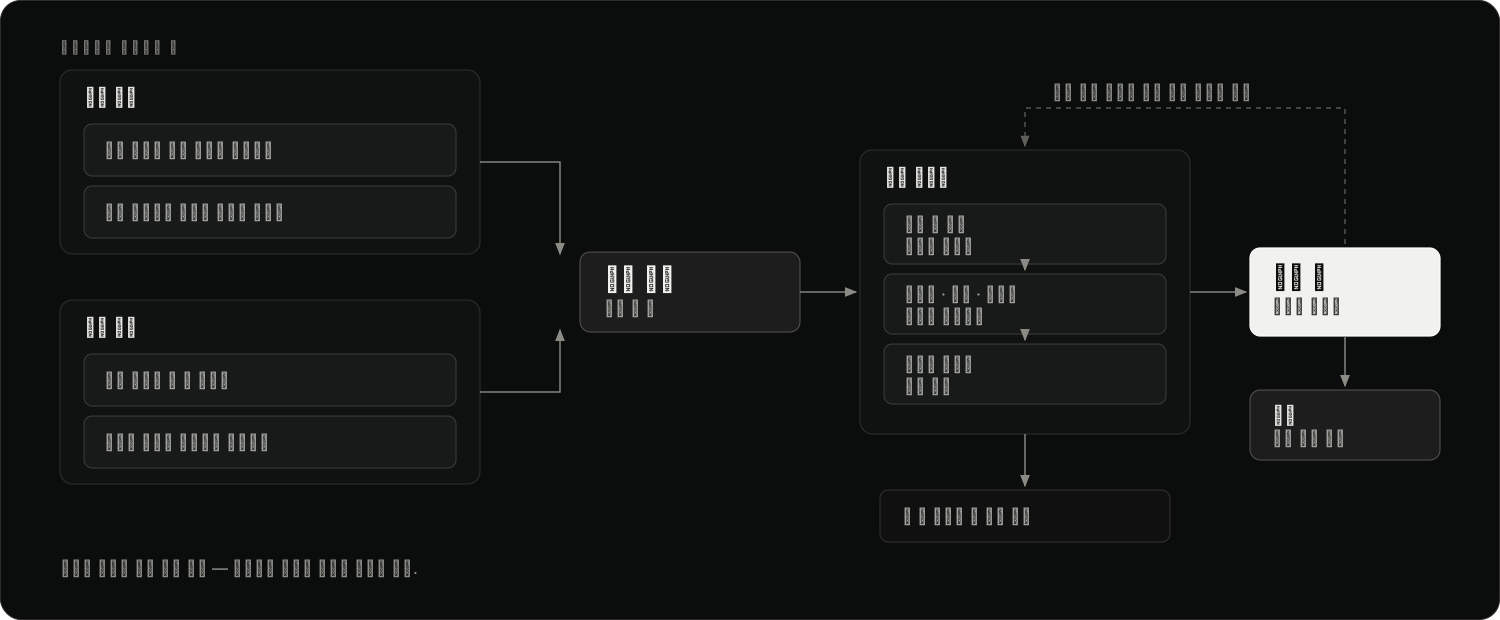
- Lab — Gives the same task twice. Once as-is, and once with one line added to the instructions. If the first fails and the second passes, the post publishes the instruction that made the difference. If both fail, it becomes a failure log. A template enforces which kind of post can be written for which combination of results, and a checker filters out any number not in the run logs.
- Honesty labels — Every post states its level of evidence: whether it was run directly, only cross-checked against documentation, based on community reaction, or still a hypothesis.
- Six selection axes — Items are scored on six axes such as novelty, relevance felt by Korean readers, and save-worthiness, with “Is this a change that lets people hand work to AI better?” as the top-priority axis. Anything below the bar is not written at all.
- Writing — Generates three candidates with different hooks independently, and only those that pass a review stage go to the approval queue.
- Approval queue — Drafts arrive on Telegram, and I handle publish, discard, or edit with buttons. Sentences I fix by hand are added back to the pile of style examples, so the output converges on my voice over time.
How a day runs
Two tracks converge on one gate. The coral node is the only point where a person steps in, and the dashed line looping back to the left is the path that feeds sentences I edited back in as style examples.
Everything from collection to experiments to drafting runs on its own on a set schedule, including two experiments a day. My daily involvement is opening the drafts that pile up on Telegram and pressing one of publish, discard, or edit. When I press edit, my revised sentence goes back in as a style example, so those few seconds show up in the quality of the next post.
Once I approve, publishing follows automatically. On a heavy day, 682 items were collected in 24 hours, and out of more than 1,700 items collected in total, seventeen posts made it all the way to publication.
What I dropped · Where it fell off
1,783 items came in, and 17 were published. Where the rest fell off is the real content of this system.
- 591 discarded — Items that fell short of the scoring criteria and never reached the writing stage. Because “Is this a change that lets people hand work to AI better?” is the top-priority axis, news where only benchmark numbers changed gets caught here.
- Sent back by the style gate — If generated text trips the translationese, banned-expression, or rhythm checks, it goes back to the revision pass. If it still fails after three revisions, it is discarded.
- Failed fact checks — Code catches posts containing numbers or proper nouns that are not in the source. Experiment posts cannot use numbers that are not in the run logs.
- 67 rejected — Posts that got through all of this and reached me, but I did not publish. That is the share a person filters at the end.
A low pass rate is the point of this system. The structure that decides what not to publish is what this project produces.