AI Content · 2025
AI Champion 2025 Preliminary-Round Qualifier — Forensic Eye
An AI Champion 2025 preliminary-round qualifier that designs on-scene clues, multispectral analysis, and AI inference as a single AR screen flow.
OutcomePassed pre-screening · submitted for interim review
Why forensic examination takes so long
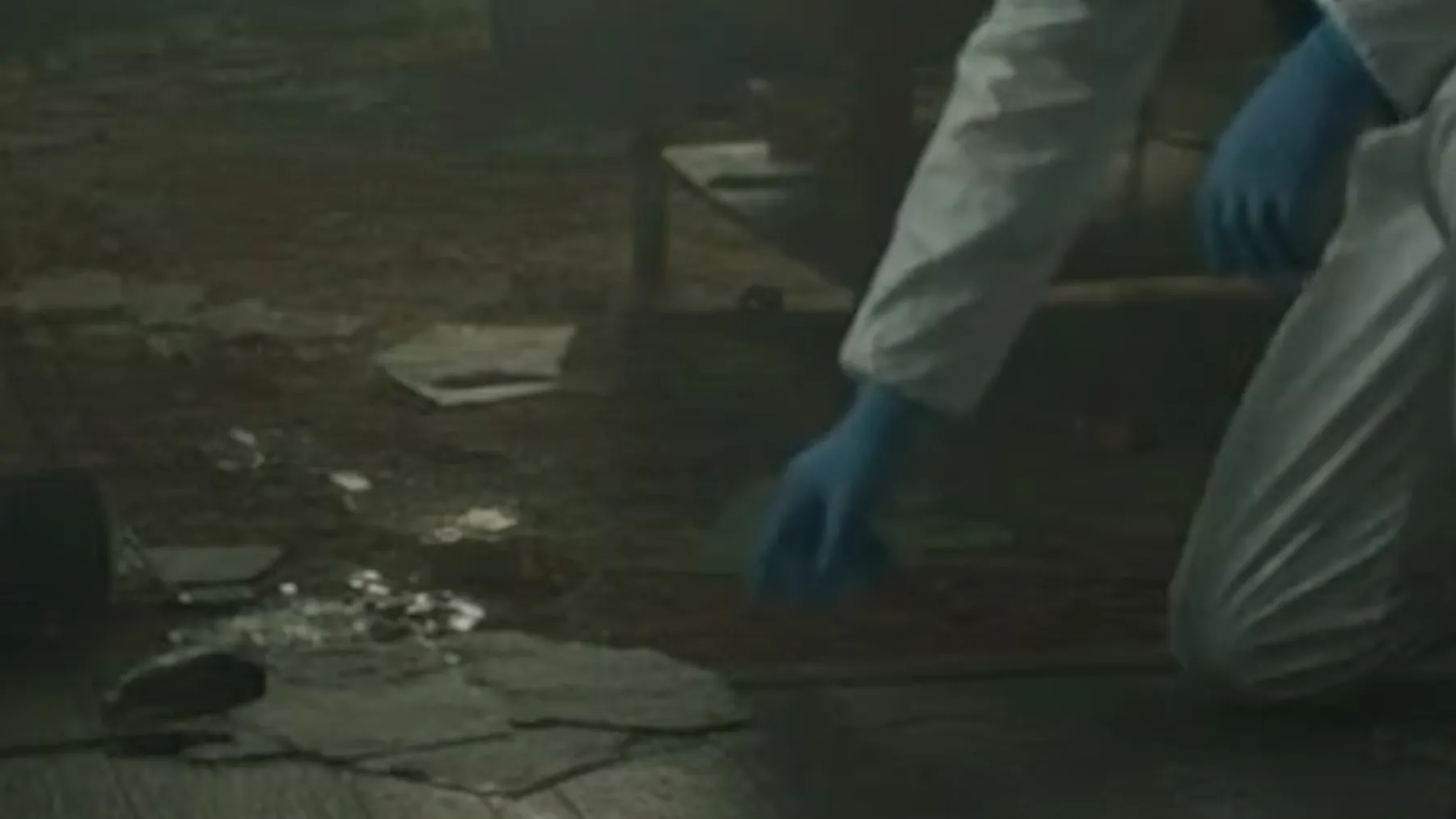
Initial forensic examination is under heavy time pressure, and the results depend on the investigator’s skill. Investigators sweep the scene carrying light sources and equipment separately, so the collected data ends up scattered and the same scene is hard to reproduce later. Finding evidence and reconstructing the incident are separate tasks, which slows judgment.
Forensic Eye is a concept that aims to narrow this gap by letting investigators observe and reconstruct the incident in one pass at the scene. It overlays evidence clues and analysis results on the scene and lets investigators record without using their hands.
Components
I grouped them in the order they are used at the scene.
- Input — An integrated capture module that adds IR, UV, and depth to stereo RGB. The premise is capturing, in one pass, even latent evidence that is invisible to the naked eye.
- Analysis — Highlights latent evidence in real time and infers the timeline, movement paths, and actions on a 3D-reconstructed space.
- Interface — Shows results as an AR overlay and leaves records and draft reports by voice command, because it has to work with gloves on.
- Integration — Separates the front end (AR input/output) from the back end (detection, reconstruction, inference) and exposes an API so it can connect to existing investigative systems such as AFIS.
Existing AR forensics has been used for visualization and training. Here the direction shifts toward reconstructing the incident.
My part
I translated technical descriptions into actual use scenes. I rearranged, in units of the investigator’s actions, which clues appear first, when analysis results open, and how different pieces of information connect. I turned that flow into a demo video and interface screens, entered it in AI Champion 2025, and advanced to the preliminary round.
This is a concept at the prototype stage (TRL 5–6), not a finished field system. Its scope was to show how several analysis technologies could connect in an actual use scene.